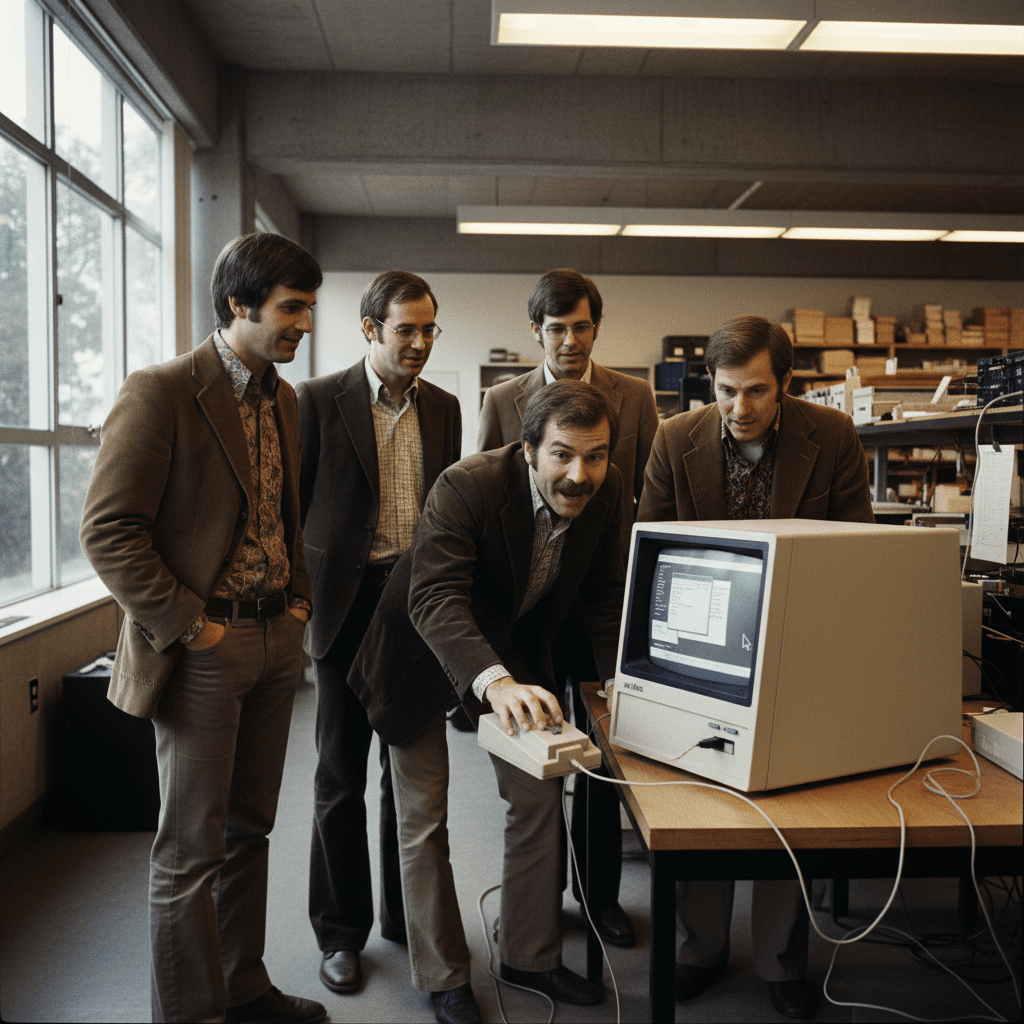
Xerox PARC
Palo Alto, CA
Xerox founded its Palo Alto Research Center in 1970 to invent the office of the future. Researchers created the laser printer, Ethernet, the mouse, windows, and object-oriented programming, yet headquarters treated PARC as a curiosity. It is the most famous example of 'Innovation without GTM'-a concept we explore deeply in the GTM OS to ensure founders don't repeat this mistake.
🏛️ Origin Story (Communication roots)
Xerox hired physicist George Pake to build a west-coast lab free from east-coast bureaucracy. Within a few years, PARC built the Alto, the first modern-feeling personal computer. This 'Skunkworks' model is a key strategy for rapid prototyping in our Startup Academy.
🚀 Scaling Move (Growth language pivots)
PARC never scaled its own inventions. Apple and Microsoft commercialized its GUI ideas, while 3Com commercialized Ethernet. This illustrates the 'Fast Follower' vs 'First Mover' advantage discussed in our competitive strategy workshops.
⚠️ Key Challenge (Crisis comms lesson)
Xerox's enormously profitable copier business made executives see computers as a distraction, so breakthroughs sat in labs. This 'Innovator's Dilemma' is a core case study for our advanced GTM students.
Business English
Vocabulary
- R&D - Research and development - work aimed at discovering and creating new products.
“Xerox PARC was one of the most productive R&D labs in history.”
- commercialize - Turn an invention into a profitable product.
“Xerox invented the GUI but struggled to commercialize it.”
Idioms
- miss the boat - Miss an opportunity.
“Xerox missed the boat on personal computing.”
- ahead of its time - Too innovative to be accepted when first created.
“The Alto was ahead of its time.”
Register Shift
Informal: They had all the cool stuff but never shipped it.
Professional: Despite pioneering foundational technologies, the organization was unable to bring them to market effectively.
Writing Prompt
You are a PARC researcher in 1975. Write a one-page memo to Xerox headquarters arguing that the Alto personal computer deserves a product budget.
Roleplay: Pitching the Alto to Headquarters
You are a PARC scientist in 1975 presenting the Alto to Xerox executives. They see copiers as the core business. Convince them to fund a small product team.
“The Alto isn't a toy for engineers. It's a preview of how every knowledge worker will interact with information within ten years.”
Goals
- Reframe the opportunity
- Address cannibalization fear
- Ask for a pilot budget
Linked Frameworks
Put this case study into practice
These stories are teaching tools. The real acceleration happens when you apply the language in your own GTM motion or startup build.
Strong Spanish/LatAm editions available for founders scaling from Latin America.
If you are building a company
ICP, positioning, and founder-led sales. Spanish and Portuguese editions.
A 60-day path from idea to a working startup. Spanish and Portuguese tracks.
Practical AI for people running a small business.
Colombian Spanish for people living or working in Bogotá.