 movements1980s-present
Open Source Movement
Global
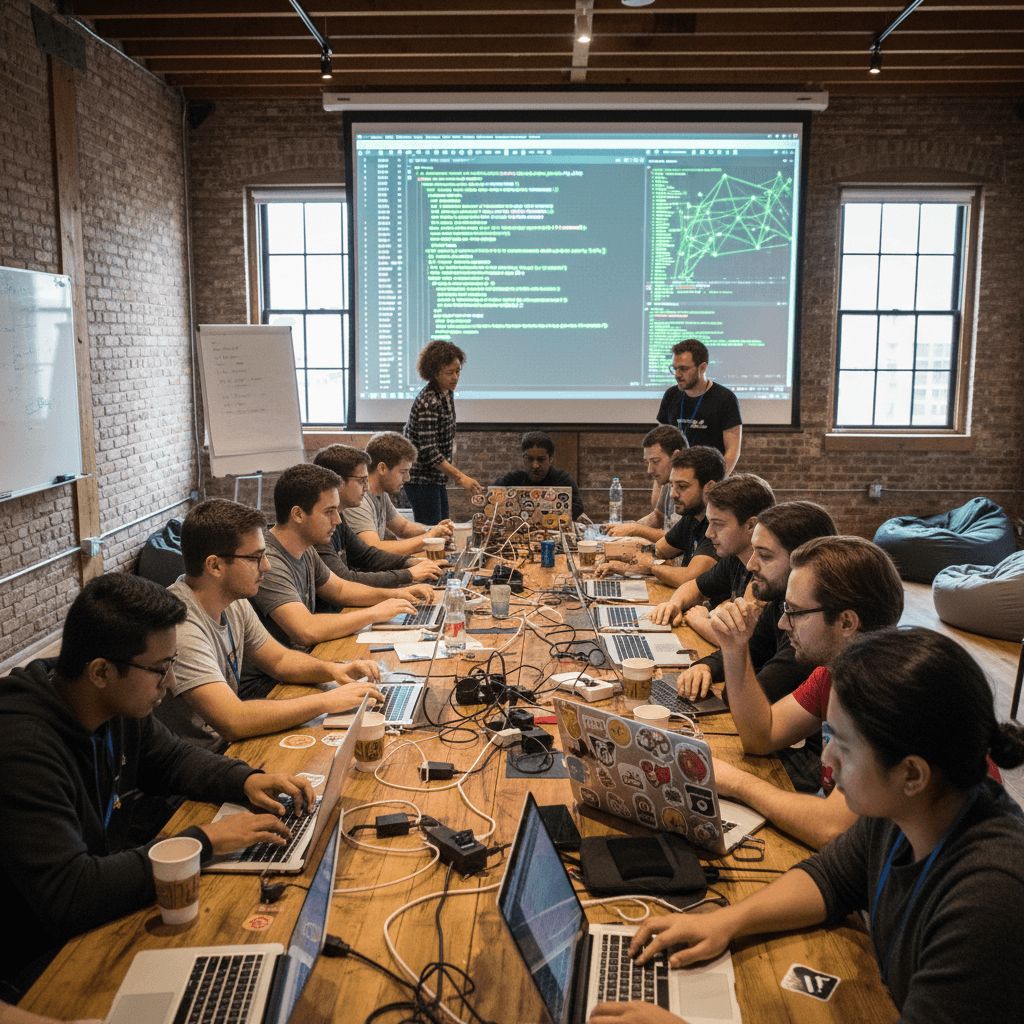
Open-source software powers the internet, from Linux and Apache to React and Python. Companies like Red Hat and MongoDB built businesses around open-source products.
🏛️ Origin Story (Communication roots)
Richard Stallman launched the Free Software Movement in the 1980s. Linus Torvalds created Linux in 1991, proving that global volunteer collaboration could build world-class software.
🚀 Scaling Move (Growth language pivots)
Open source scaled through community contribution, permissive licenses, and later commercial models like support, hosting, and open-core licensing.
⚠️ Key Challenge (Crisis comms lesson)
Open-source projects struggle with sustainability, maintainer burnout, and companies using free software without contributing back.
Business English
Vocabulary
- source code - The human-readable instructions that make up software.
“Open-source projects publish their source code.”
- license - Legal terms defining how software can be used.
“Open-source licenses determine whether commercial use is allowed.”
Idioms
- give back - Contribute to a community.
“Successful companies should give back to open-source projects they use.”
- stand on the shoulders of giants - Build on previous work.
“Every modern startup stands on the shoulders of open-source giants.”
Register Shift
Informal: Open source means anyone can use and improve the software for free.
Professional: Open-source software is distributed with source code and licenses that permit modification, redistribution, and collaborative development.
Writing Prompt
Write an email to your engineering team encouraging contributions to an open-source library the company depends on.
Roleplay: Open-Source Business Model
You are a founder explaining to an investor how you will make money from an open-source project.
“The core is free and open, which drives adoption. We monetize through a managed cloud service and enterprise support.”
Goals
- Explain open-core model
- Show adoption metrics
- Get seed funding
Linked Frameworks
Put this case study into practice
These stories are teaching tools. The real acceleration happens when you apply the language in your own GTM motion or startup build.
Strong Spanish/LatAm editions available for founders scaling from Latin America.
If you are building a company
ICP, positioning, and founder-led sales. Spanish and Portuguese editions.
A 60-day path from idea to a working startup. Spanish and Portuguese tracks.
Practical AI for people running a small business.
Colombian Spanish for people living or working in Bogotá.