Candidate one
Correct but generic
The answers describe effort and experience without showing the value the candidate could bring to this company.
Online interview preparation
Show your business value, answer with evidence, and create a peer relationship with the interviewer. Watch the comparison, then rehearse your own answers.
Created by Mike Sullivan, a TESOL-certified English instructor, author, and 20-year Silicon Valley veteran.
The clip uses a public-company number to make the structure obvious. Steal the move, not the scale. The teaching script below is the version we use in the room.
Business English interview example
Both candidates speak understandable English. The second candidate researches the company, names a business problem, supports the answer with numbers, and asks a useful question. The interviewer begins treating the candidate as a potential peer.
Candidate one
The answers describe effort and experience without showing the value the candidate could bring to this company.
Candidate two
Research, evidence, and business judgment give the interviewer a reason to keep exploring the candidate's thinking.
Which one sounds more like you? Which would you rather be? Which would you hire?
Interviewer: Thanks for joining us. What made you interested in our team?
Candidate: I saw the job online, and it looks like a very good company. I think it is a great opportunity for me.
Interviewer: Tell me a little about your background.
Candidate: I am a business analyst. I have about six years of experience. I work hard, and I learn quickly.
Interviewer: We use a lot of AI tools here. How do you handle a project when it is not going well?
Candidate: I work harder, and I ask my manager what to do. I try to follow the plan and finish on time.
Interviewer: Thank you for your time. We will get back to you.
Candidate: Thank you very much.
Interviewer: Thanks for joining us. What made you interested in our team?
Candidate: I saw you added an AI assistant to support last quarter. What share of tickets does it actually close?
Interviewer: Not what we expected. We have a lot of pilots going, but the quality is too inconsistent for deployment.
Candidate: That can be a measurement problem, not a technology problem. Most teams cannot tell whether the assistant is reducing handle time or just moving work around. I ranked every experiment by cost, adoption, and hours saved. We cut the weak ones and doubled down on the two that paid for themselves.
Interviewer: How much did that change your numbers?
Candidate: We went from eight stalled experiments to two that reduced first-response time by 30 percent. The key was agreeing the metric before we approved more spend.
Interviewer: That is the kind of discipline we are missing now.
Meeting House agenda
Interview English is the same language you use in demos, client calls, project updates, and investor questions. Come speak as a colleague, not as a candidate.
Interview roleplay lesson pack
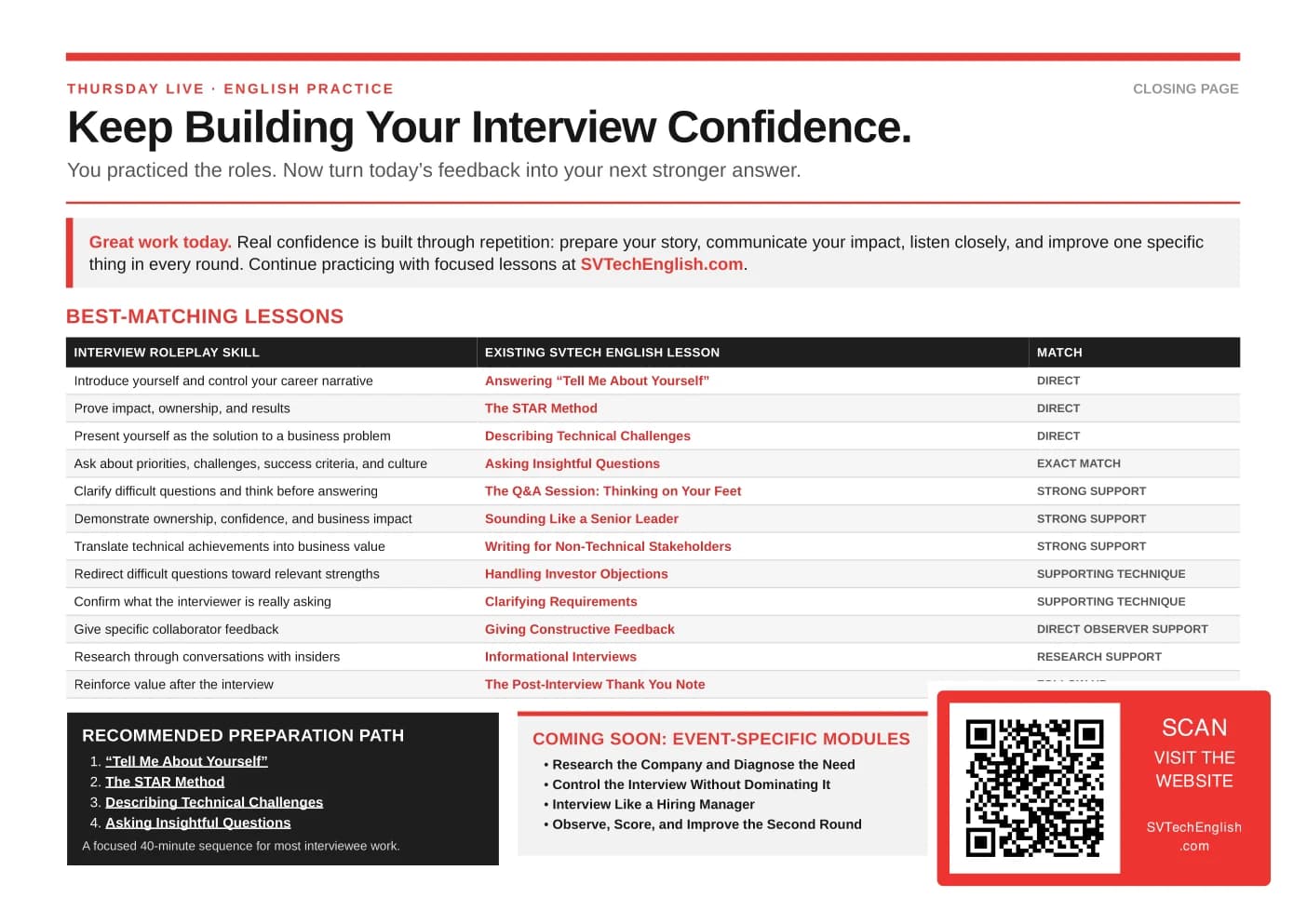
An evergreen 15-page guide for interview practice, useful any week you want to focus on interviews specifically. Scroll to see all 15 pages, then use the short lessons and examples below to practice.

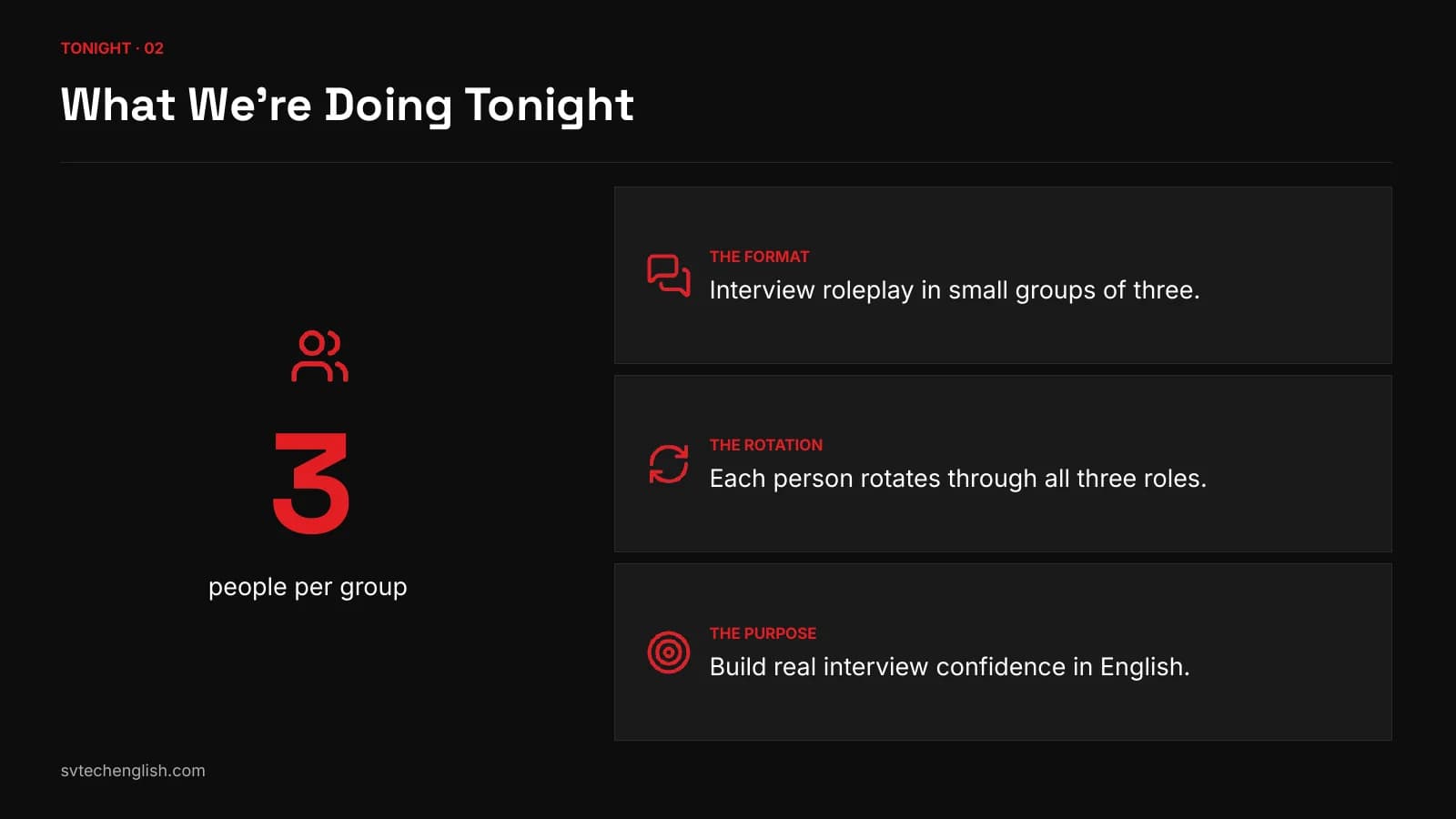
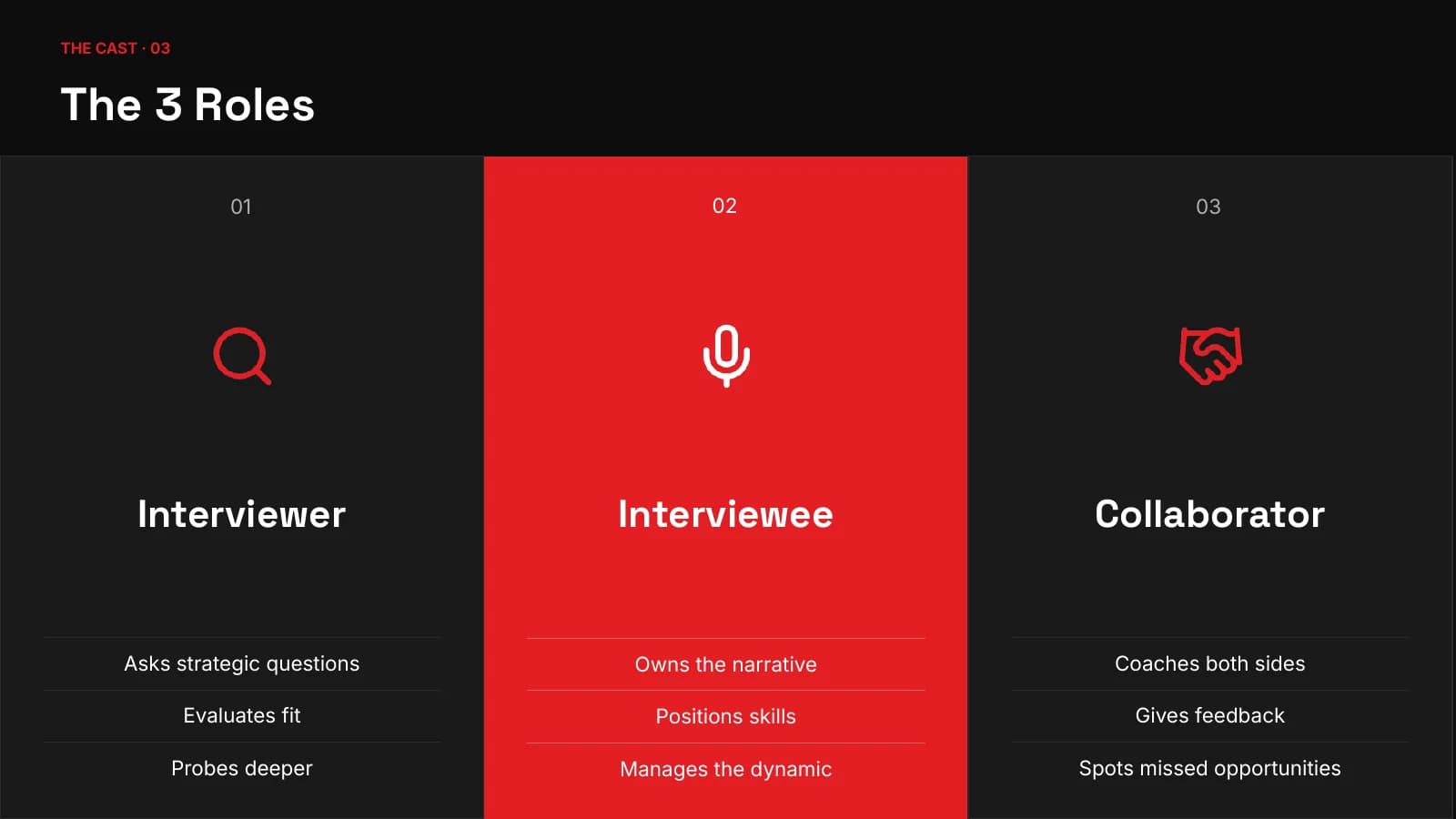
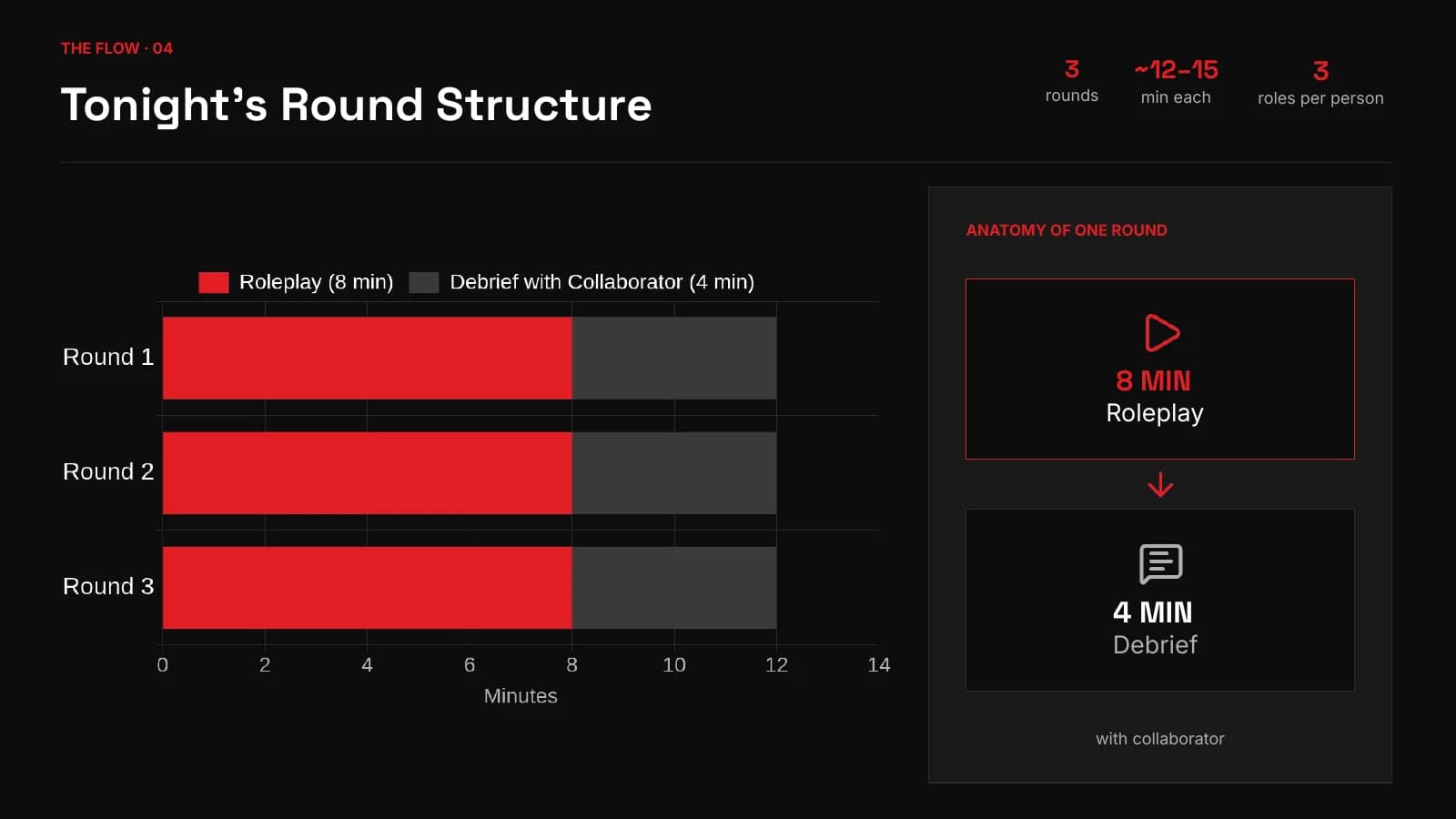
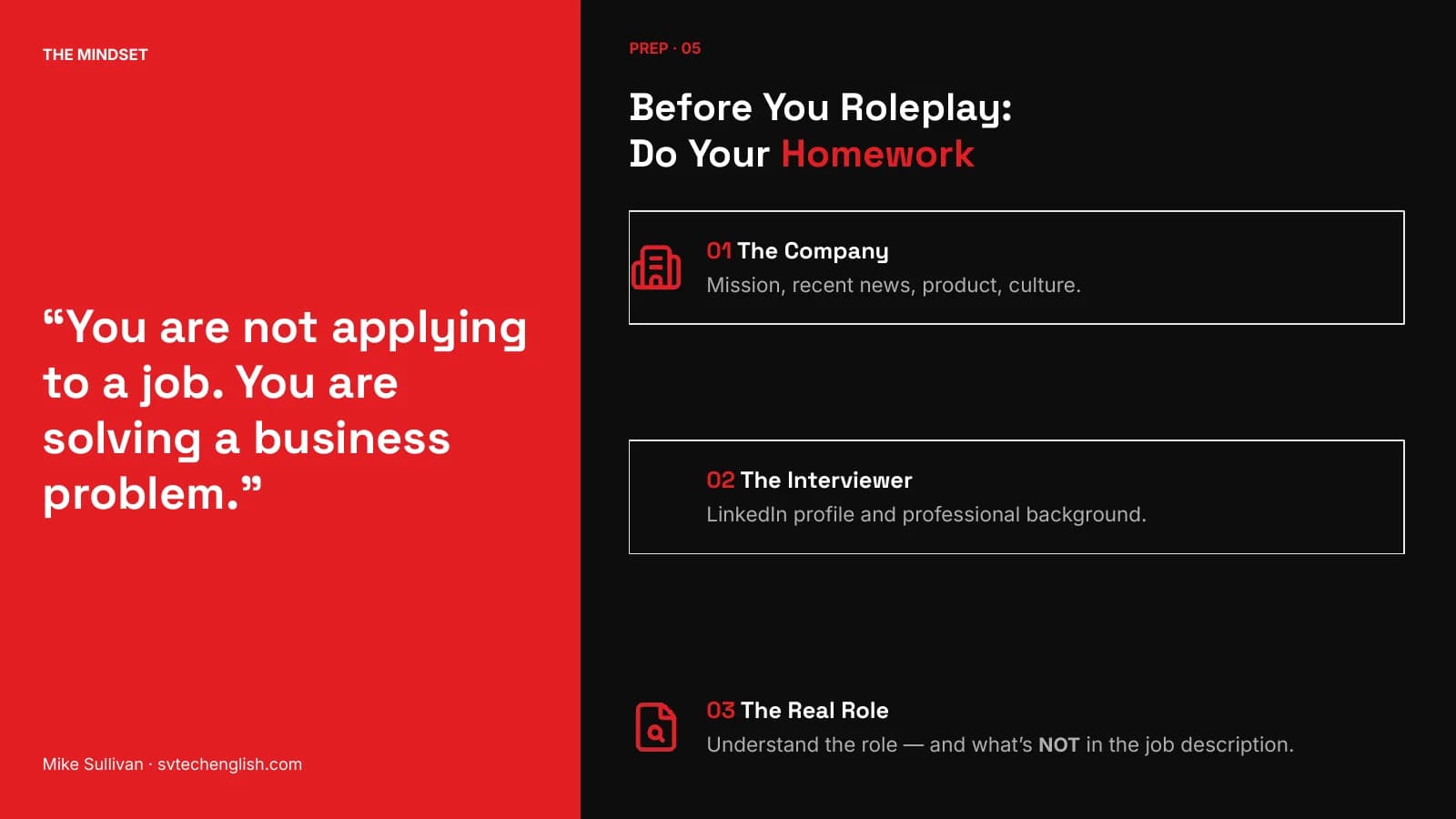
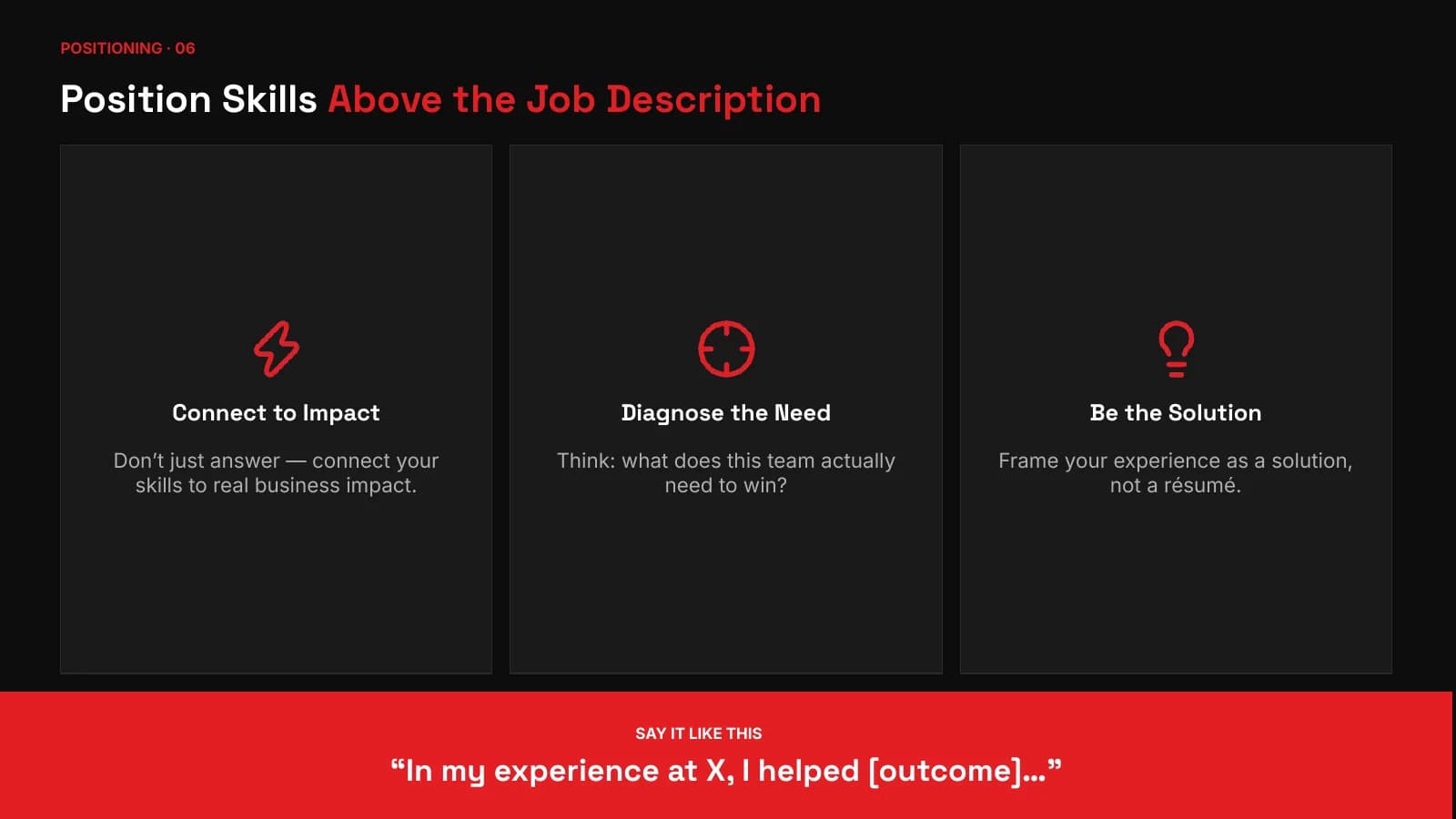
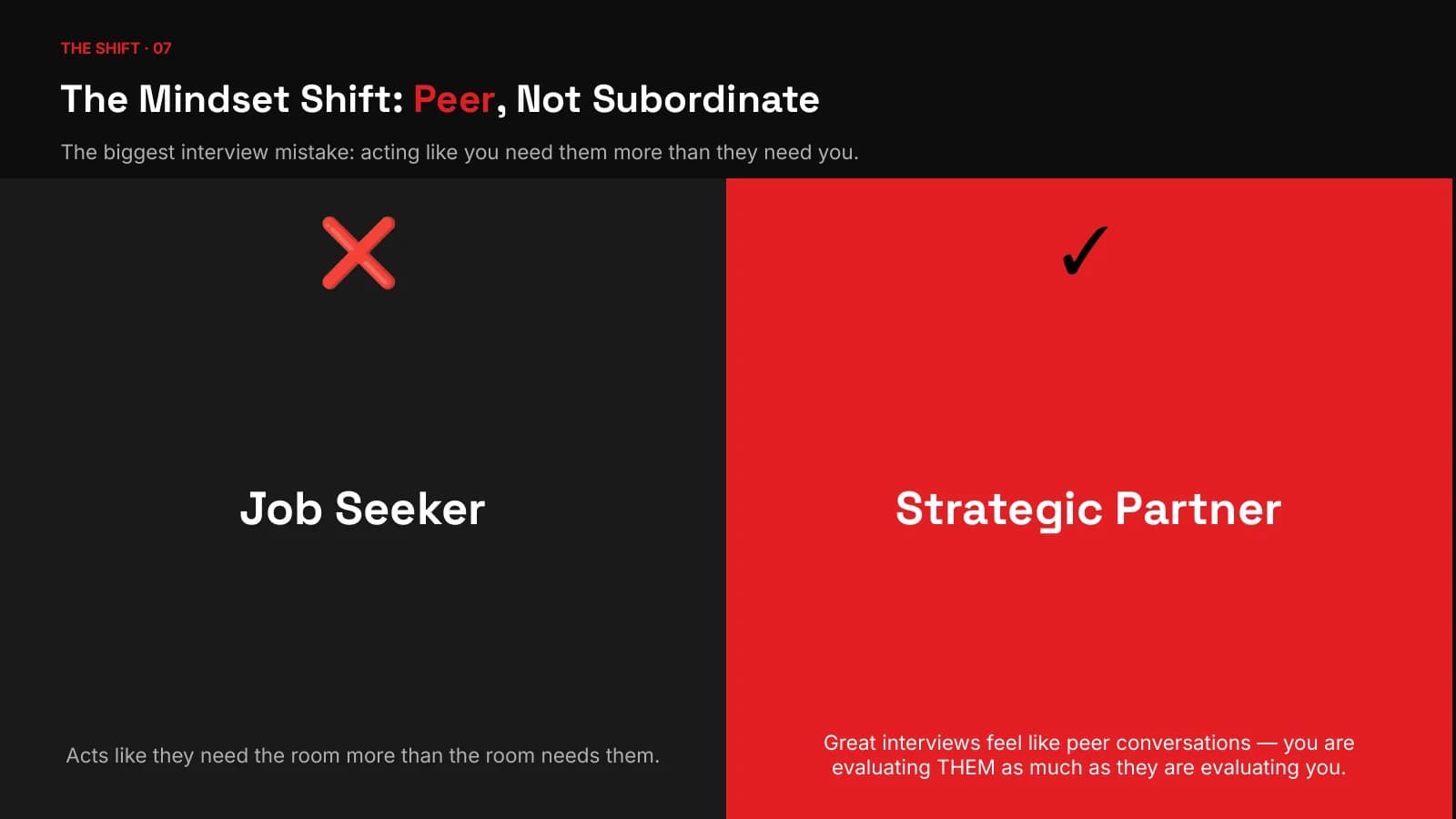
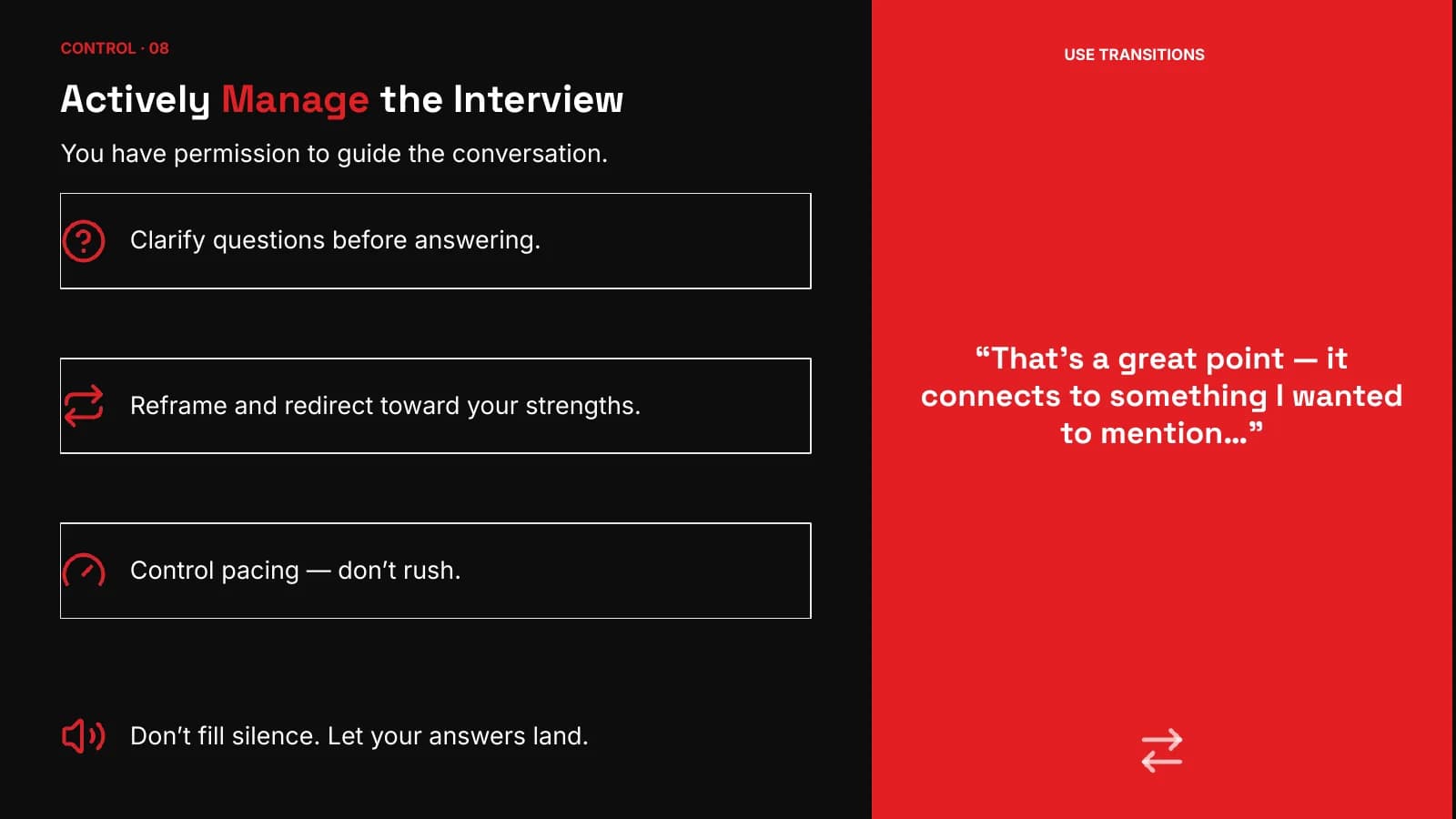
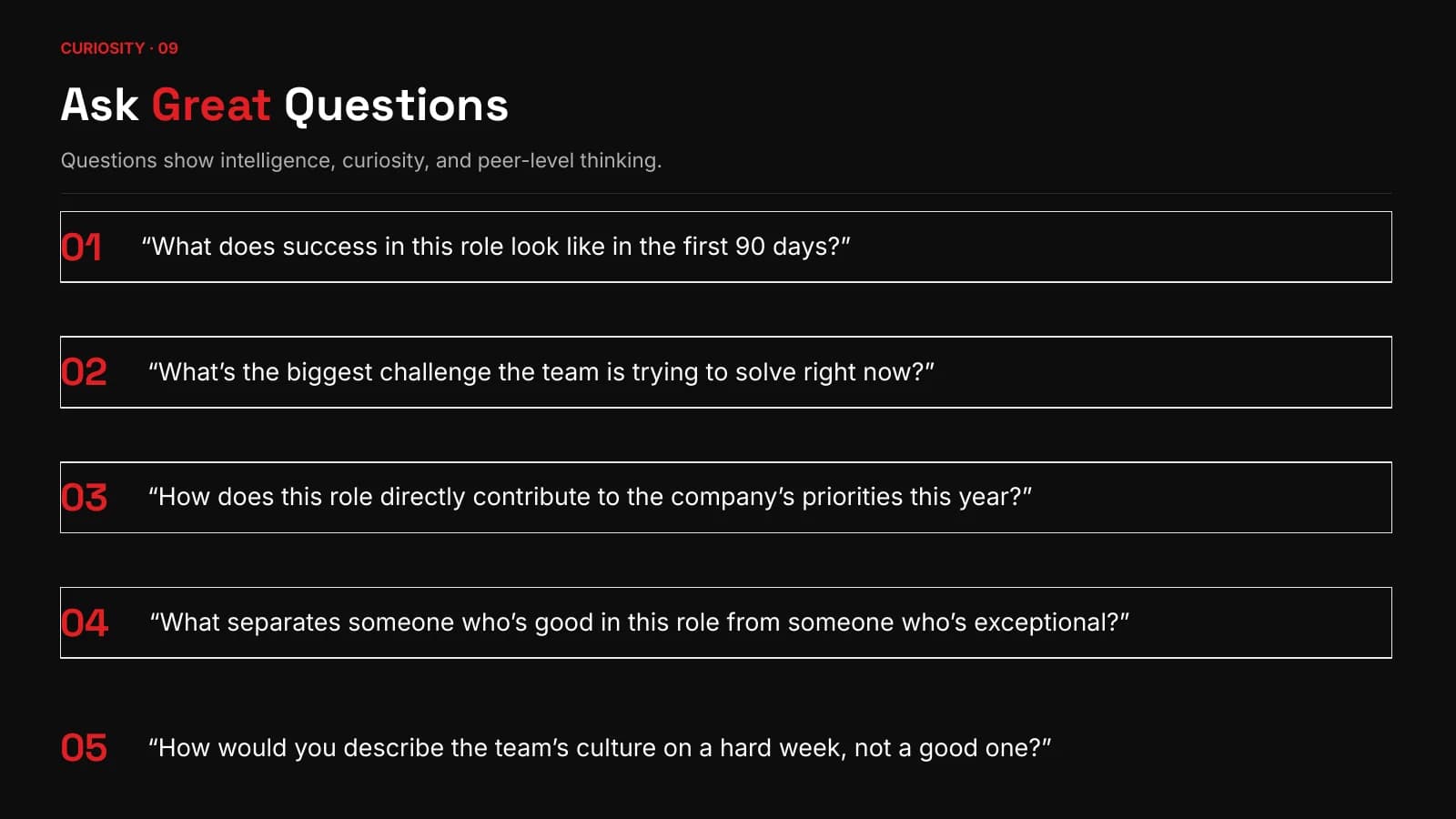
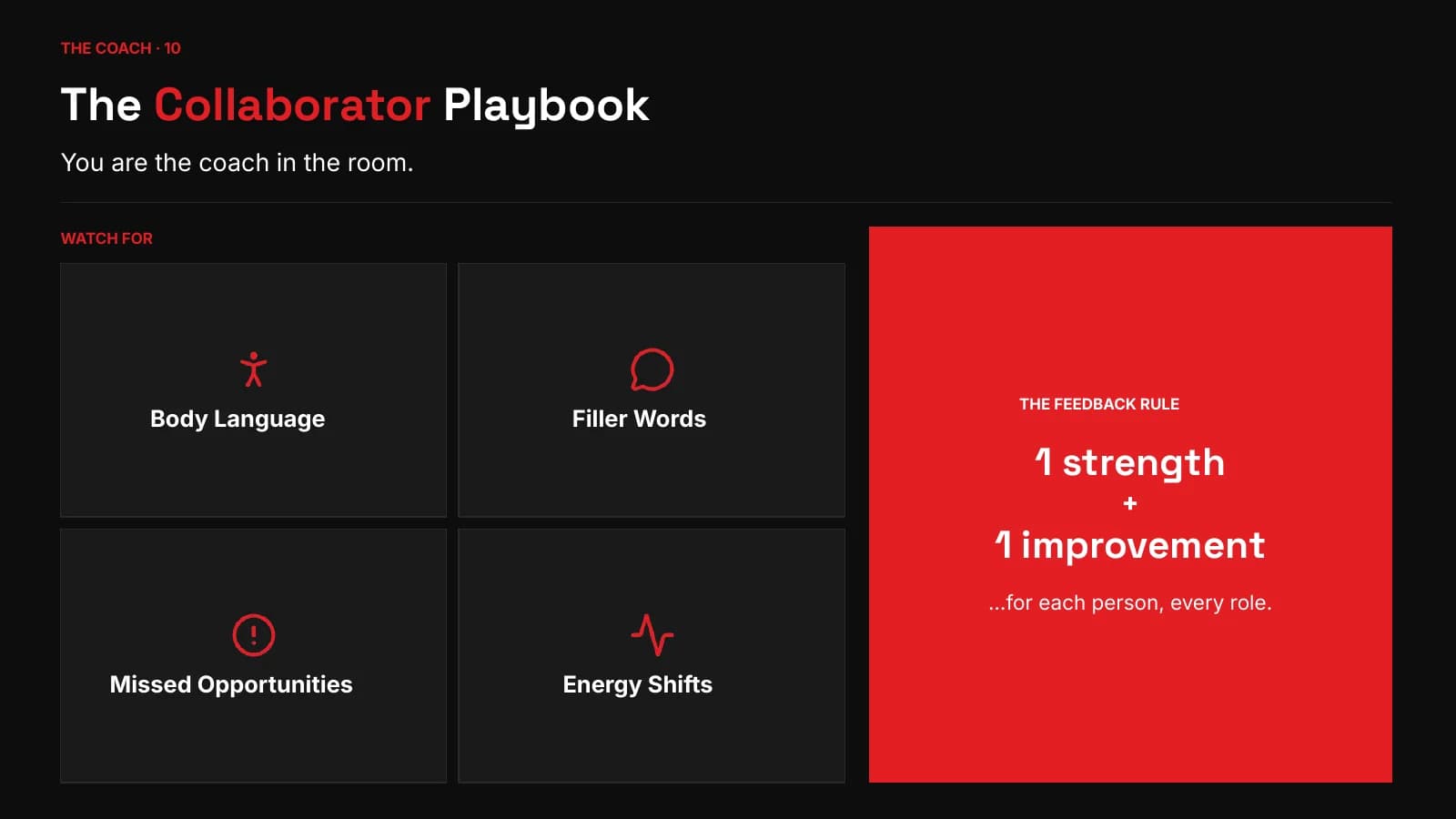
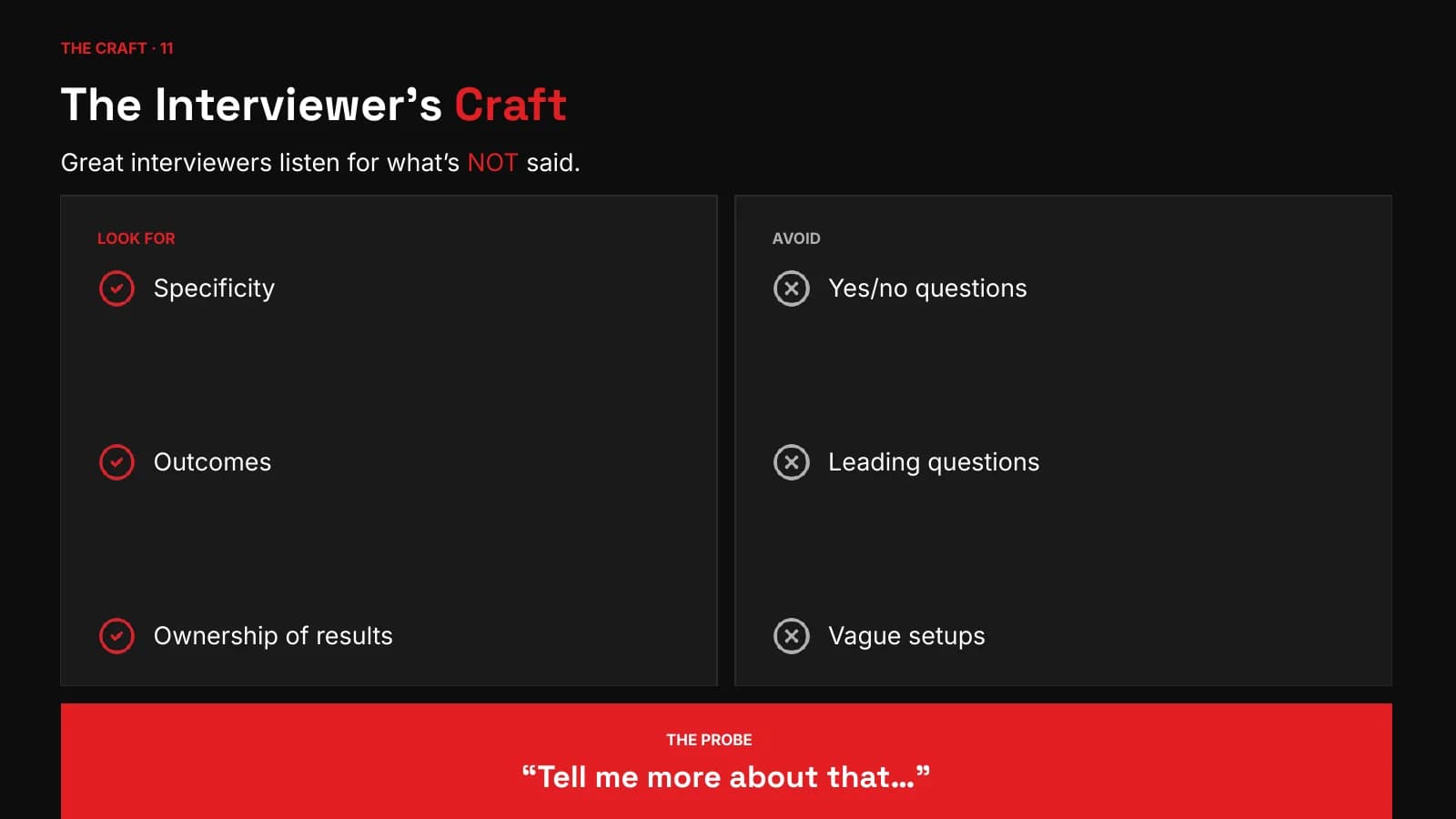
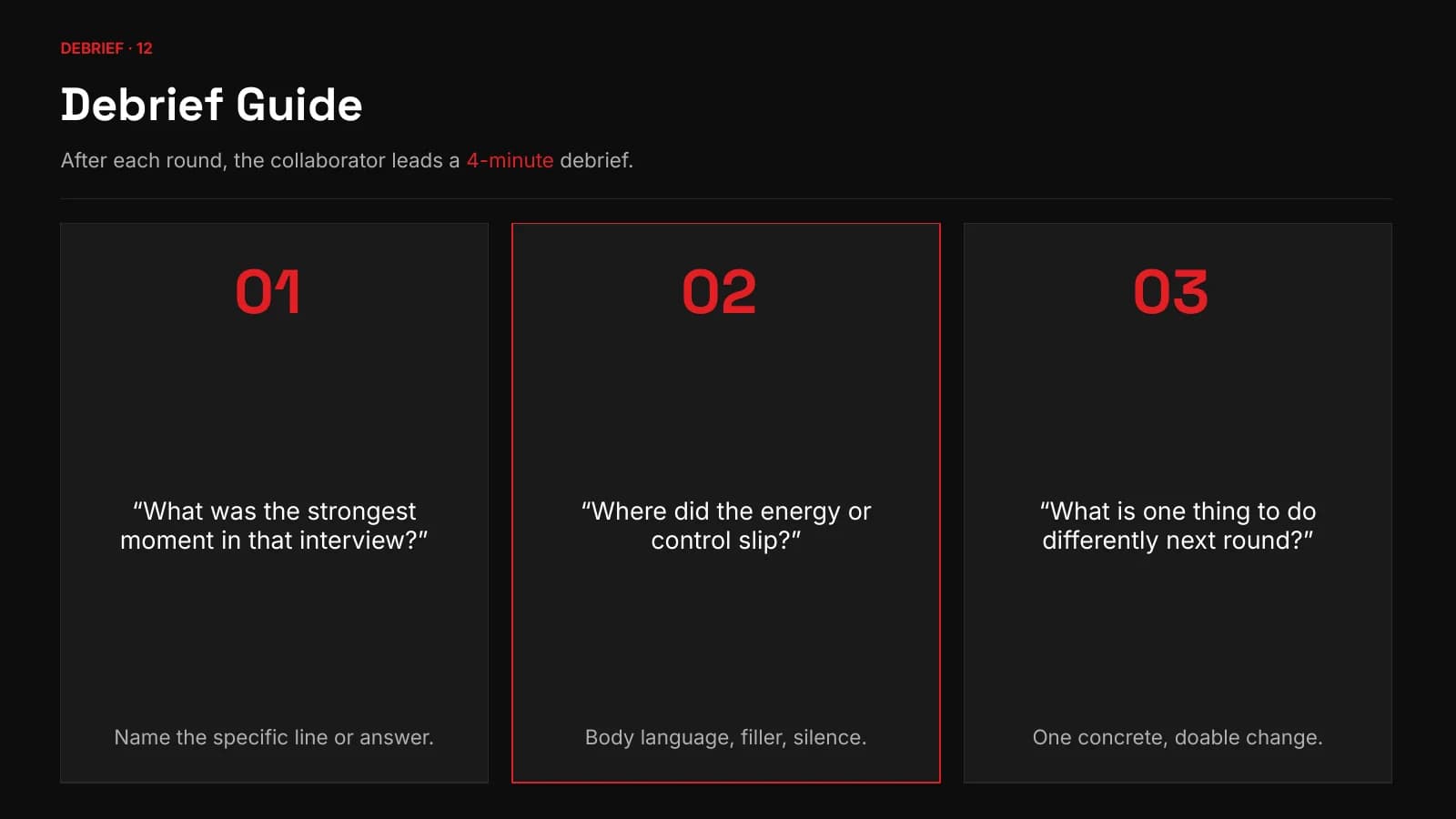
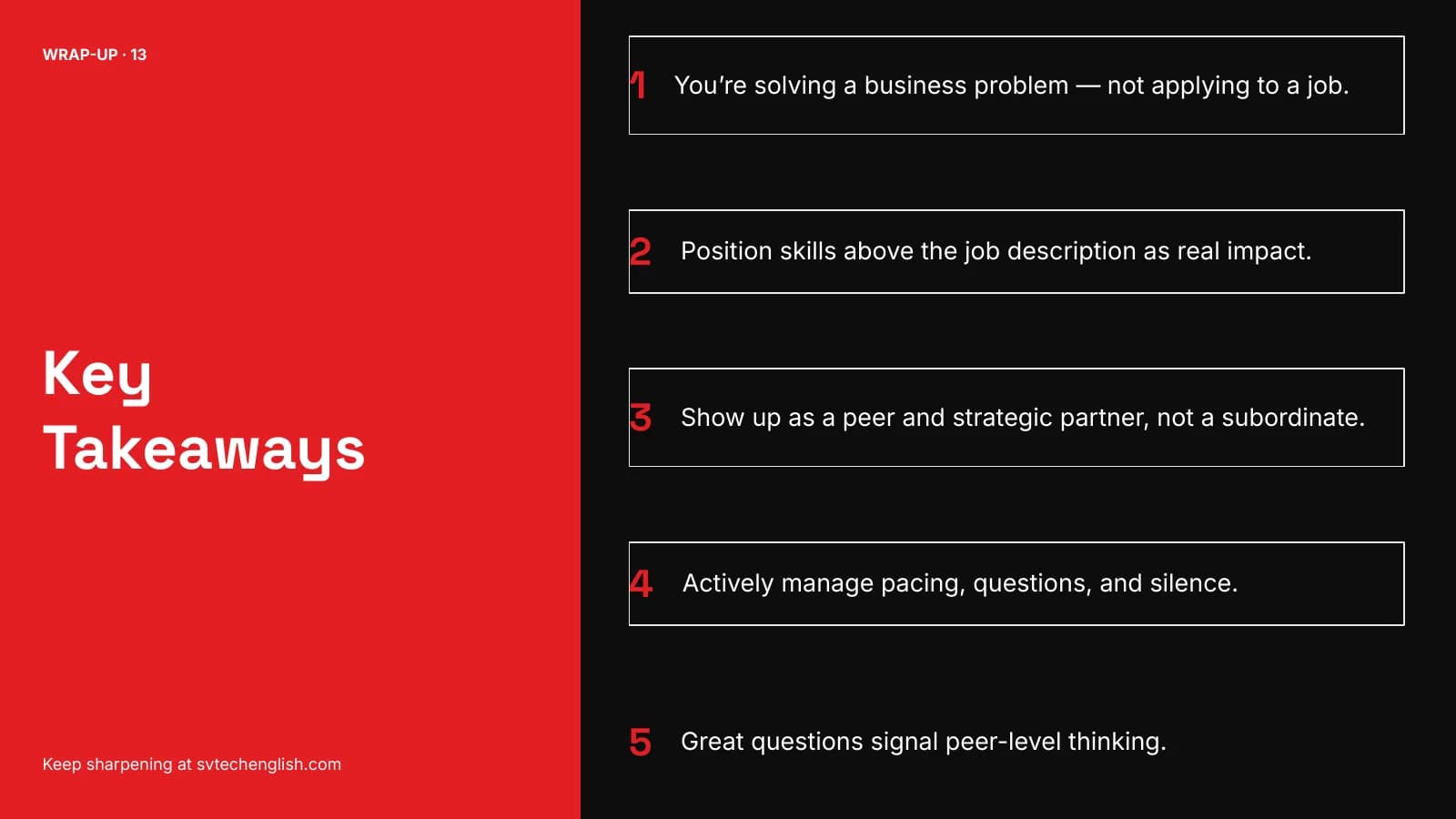
It is practice for a real interview. One person asks questions, one person answers, and one person listens. Then you change roles and try again.
Practice live in Bogotá
Ask the interview questions. Ask for an example when you need more detail.
Answer the questions. Use a real example from your work or studies.
Listen. Say one thing that worked and one thing to improve.
40-minute practice
01
Read the company website and the job description.
02
Pick two work stories that show your skills.
03
Explain how your experience can help this team.
Simple answer structures
Your job → one good result → why you want this role
“I am a software engineer with five years of experience. Last year, I helped my team reduce checkout errors by 30%. I want this role because I enjoy building reliable products for many users.”
Problem → what you did → result
“Our releases often failed. I added a test and a simple rollback plan. After three months, release problems were 50% lower.”
Ask what they mean → choose an example → answer
“Before I answer, would you like to hear about the technical work or how I helped the team?”
Your questions
8 minutes
Ask and answer the questions. Use real examples.
4 minutes
Share one good point and one thing to improve.
Next round
Use the feedback and try again.
Continue practicing
It is practice for a real job interview. One person asks questions, one person answers, and one person listens and gives feedback. Then everyone changes roles and tries again.
Start with Tell Me About Yourself, the STAR Method, Describing Technical Challenges, and Asking Insightful Questions. The four lessons take about 40 minutes.
One person is the interviewer, one is the candidate, and one is the observer. After the interview, the observer says one thing that worked and one thing to improve. Then everyone changes roles.
Learn what the company does, read the job description, and look at the interviewer's role. Choose two work stories that show how you can help the team.
Explain the problem, what you did, and the result. Use simple words. Add a number when you can, such as time saved, errors reduced, or customers helped.
Research the company, connect your experience to a business problem, support your answer with evidence, and ask a useful question. The interviewer should hear how you think and how you would contribute, not only a list of your qualifications.
The second candidate names a specific company fact, treats the gap as a measurement problem, puts a result on the table, and asks a question that makes the interviewer talk about the business. Steal that structure at the scale of the company you are interviewing with.
English Roleplays Live meets every Thursday from 5:00 PM to 8:00 PM at Meeting House Bogotá, Calle 32 #6B-43, Piso 3. The session covers business, travel, and everyday English situations.
ICP, positioning, and founder-led sales. Spanish and Portuguese editions.
A 60-day path from idea to a working startup. Spanish and Portuguese tracks.
Practical AI for people running a small business.
Colombian Spanish for people living or working in Bogotá.